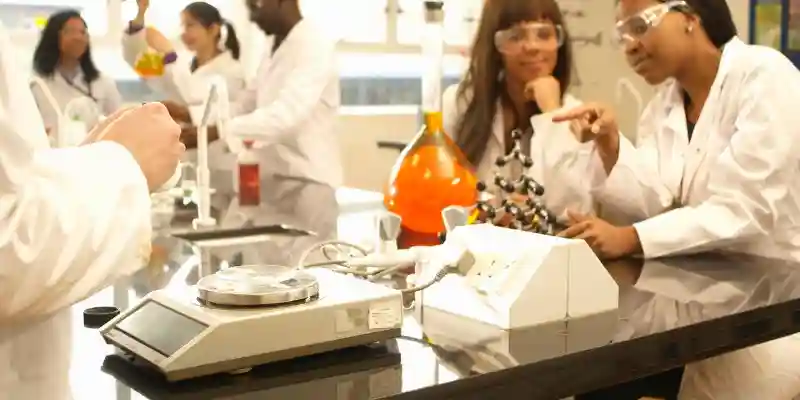
Study Clinical Laboratory Sciences in the USA
Want to be matched with Clinical Laboratory Sciences programs?
Let us know what you're looking for so we can find the best school for you.

Field of study: Clinical Laboratory Sciences
Clinical Laboratory Sciences is a field of study focused on the analysis of biological samples to support the diagnosis, treatment, and prevention of disease. It plays a central role in healthcare by providing accurate laboratory data that informs medical decisions and patient care.
In academic and professional contexts, clinical laboratory sciences prepare students to work in medical and diagnostic laboratories. The field integrates biology, chemistry, and medical science, with emphasis on laboratory testing, quality control, and ethical practice. Key areas include clinical chemistry, hematology, microbiology, immunology, transfusion medicine, and molecular diagnostics.
What does the study of Clinical Laboratory Sciences consist of?
The study of clinical laboratory sciences combines scientific theory with extensive hands-on laboratory training. Programs are designed to develop technical skills, analytical thinking, and professional competence in clinical settings.
Key components typically include:
- Clinical chemistry
Analysis of blood and bodily fluids to assess organ function and detect metabolic disorders. - Hematology and coagulation
Study of blood cells, clotting systems, and blood-related diseases. - Microbiology
Identification of microorganisms such as bacteria, viruses, fungi, and parasites. - Immunology and serology
Examination of immune responses and diagnostic testing based on antigen–antibody interactions. - Transfusion medicine
Study of blood banking, compatibility testing, and transfusion safety. - Molecular diagnostics and laboratory management
Training in molecular testing methods, quality assurance, safety standards, and laboratory ethics.
These components work together to ensure accurate testing and effective collaboration within healthcare teams.
What are the benefits of studying Clinical Laboratory Sciences in the U.S.?
- Access to accredited programs with strong clinical training
- Opportunities for clinical placements and supervised laboratory experience
- Preparation for professional certification or licensure, depending on the program
- High relevance to healthcare, diagnostics, and public health
- International recognition of U.S. clinical laboratory education
What colleges and universities in the U.S. have strong Clinical Laboratory Sciences programs?
Examples of U.S. institutions offering well-established clinical laboratory sciences programs include:
- University of Washington
- University of Minnesota
- Ohio State University
- University of Illinois Chicago
- Rush University
- University of Utah
- University of North Carolina at Chapel Hill
This list is not exhaustive, and many other U.S. institutions offer strong clinical laboratory sciences programs.
What U.S. community colleges have strong Clinical Laboratory Sciences programs?
Community colleges often provide associate degrees, certificates, and transfer pathways in medical or clinical laboratory sciences. Examples include:
- Austin Community College
- Houston Community College
- Santa Monica College
- Northern Virginia Community College
- Tidewater Community College
This list is not exhaustive, and program structures vary by institution.
What kind of career opportunities will I have after studying Clinical Laboratory Sciences in the U.S.?
Clinical laboratory sciences graduates are prepared for roles that support medical diagnosis and patient care. Common career paths include:
- Medical laboratory scientist or technologist
- Clinical laboratory technician
- Microbiology or hematology technologist
- Transfusion medicine technologist
- Molecular diagnostics specialist
- Laboratory supervisor or quality assurance specialist
Career outcomes vary based on degree level, certification, and professional experience.
What skills or interests align well with Clinical Laboratory Sciences?
- Interest in healthcare and diagnostic science
- Strong attention to detail and accuracy
- Comfort working with biological samples and laboratory equipment
- Analytical and problem-solving skills
- Commitment to safety, ethics, and quality standards
Step 1 of 3
Use of this form constitutes your agreement to our Terms of Use and Conditions.
Step 2 of 3
Step 3 of 3
Thank You!
Your information has been submitted successfully.
For more information, please review our Terms and Conditions.
Useful Articles
Check Out These Schools
College of Staten Island of the City University of New York
$5,000—$10,000 Semester
The Fashion Institute of Technology (FIT)
Typical cost per Session: $1,000—$2,000
Clark College
Typical cost per Year: $15,000—$20,000
Santa Monica College
Typical cost per Year: $10,000—$15,000