


Study Spanish in the USA

Want to be matched with Spanish programs?
Let us know what you're looking for so we can find the best school for you.

Studying Spanish in the United States can strengthen how you speak, read, write, and understand the language while exploring the literature and cultures of Spanish-speaking communities. Programs range from transfer-focused associate degrees to bachelor’s degrees with advanced language, literature, and linguistics courses.
As an international student, you can start at a community college or enter a university directly. Your prior Spanish proficiency, intended career, and transfer plans should shape your choice. This guide helps you compare degree types, placement, cultural study, and practical experience.
Spanish at a Glance
Credentials: Spanish AA or AA-T; Spanish BA; selected graduate degrees and minors.
Typical duration: Associate study often around two years; bachelor’s study commonly around four years, depending on credits and placement.
Study areas: Grammar, conversation, composition, phonetics, linguistics, literature, film, and Hispanic cultures.
Related subjects: Translation, interpreting, Latin American studies, linguistics, education, and international studies.
Career directions: Education, multilingual communications, translation, community services, business, and cultural programs.
Key Decisions When Choosing a Spanish Program
Do I want language proficiency or a full Spanish major?
If your goal is practical conversation, a sequence of language classes may be enough. A Spanish major normally adds sustained study of literature, culture, and language analysis. Compare upper-level course requirements so the degree matches the kind of expertise you want to build.
Should I begin at a community college?
A Spanish transfer associate degree can provide lower-division preparation before a bachelor’s degree. It does not guarantee that every course will count toward your chosen major or that graduation will take exactly two additional years. Ask the receiving university for a course-by-course plan.
What if I already speak Spanish at home?
Heritage speakers may need advanced writing, formal grammar, and academic reading more than introductory conversation. Some colleges offer courses specifically for Spanish speakers or placement routes. Ask how prior knowledge is assessed before choosing your first course.
Should I focus on literature, linguistics, or professional Spanish?
Literature and cultural studies emphasize interpretation and context; linguistics examines how language works; professional Spanish applies communication in settings such as healthcare or business. These emphases often overlap. Compare electives, required projects, and the faculty’s areas of study.
Will a Spanish degree qualify me to teach or interpret?
Not by itself in every setting. School teaching may require a state-approved educator preparation route and licensure; interpreting and translation roles may require advanced proficiency and specialized training. Identify the role you want, then check its requirements separately from the Spanish degree.
What Is Spanish?
Spanish is an academic field examining language, literature, history, and cultures across Spanish-speaking societies. University study involves more than vocabulary: you may analyze fiction, film, and historical texts; investigate dialects; and practice formal writing. Programs examine Spain, Latin America, the Caribbean, and Spanish-speaking communities in the United States. A Spanish degree differs from a short course because it requires sustained advanced study. It also differs from translation or interpreting training, which develops specific professional skills involving accuracy, ethics, and subject expertise. These fields overlap, but their qualifications are not identical. Compare course requirements to understand how each program develops your academic interests.
What Will You Study?
Study areas include speaking; composition; phonetics; linguistics; literature; film; translation exercises; and cultural history. Learning can involve discussions, presentations, research papers, and recorded speech.
Is Spanish Right for You?
Spanish may suit you if you enjoy cross-cultural communication, close reading, and exploring language variation. Consistent practice and curiosity help.
Degree and Pathway Options
Associate degrees and transfer AA-T: Build language skills and general education, then seek transfer-credit evaluation for a bachelor’s program. An AA-T is not itself a BA.
Bachelor of Arts in Spanish: Develop advanced language competence alongside literature, linguistics, and cultural analysis; individual universities offer different emphases.
Spanish minor or elective study: Add structured language coursework to another major without completing the full Spanish degree.
Master’s or doctoral study: Where offered, pursue advanced language, literary, linguistic, or cultural scholarship; admissions often require substantial prior preparation.
Admission Considerations for International Students
Requirements vary by school and degree. Review transcripts, English proficiency requirements, financial documentation, and any university-specific application materials. A Spanish placement test may determine your starting course after admission; it is not necessarily an admissions test. Graduate applications may request writing samples or recommendations.
Cost of Studying Spanish
Compare tuition, fees, housing, meals, insurance, books, technology, transportation, and personal expenses. Ask about optional study-abroad costs. Costs vary by institution.
Professional Requirements
A Spanish degree does not automatically provide a teaching license or interpreting credential. Requirements vary by occupation and state. Confirm specific professional preparation before choosing a program.
Career Possibilities
Language educator: Teach after meeting relevant training and licensing requirements.
Translator: Render written meaning accurately between languages, often with specialization.
Interpreter: Support spoken communication; professional contexts can require credentials.
Multilingual communications coordinator: Develop culturally appropriate messages and materials.
Community outreach specialist: Connect public or nonprofit services with different communities.
Cultural program coordinator: Plan educational or community events and partnerships.
Explore Spanish Programs on Study in the USA
Explore active Study in the USA schools offering Spanish, a closely related program, or a verified pathway into the field.
Community Colleges and Transfer Pathways
Santa Monica College
Spanish — Associate in Arts for Transfer (AA-T); Santa Monica, California.
The language, literature, and cultural foundation is designed for upper-division Spanish study. This route may suit students preparing to transfer, provided their receiving institution accepts the planned courses.
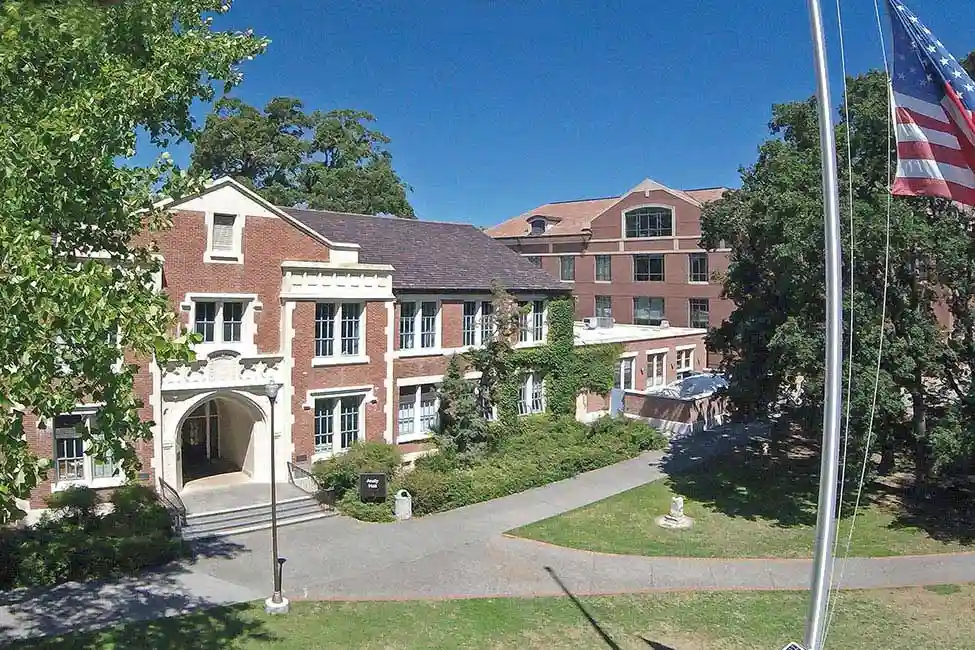
Santa Rosa Junior College
Spanish — Associate in Arts for Transfer (AA-T); Santa Rosa, California.
Coursework in speaking, writing, reading, and Hispanic cultures provides a transfer-oriented foundation. The college also lists a Spanish AA, so compare the two degree plans before applying.
Long Beach City College
Spanish for Transfer — Associate in Arts for Transfer (AA-T); Long Beach, California.
Its published degree guide emphasizes communication for both new and heritage learners alongside cultural awareness. Confirm the current catalog requirements because the accessible guide is older.
Colleges and Universities
California State University, Chico
Spanish — Bachelor of Arts; Chico, California.
This on-campus major includes opportunities to explore language and Hispanic cultures, with coursework relevant to healthcare, business, and translation interests. Check which specialized courses are scheduled.
Bridgewater State University
Spanish — Bachelor of Arts; Bridgewater, Massachusetts.
The degree incorporates linguistics, film, literature, composition, and conversation. It may suit students seeking advanced language study or considering the separate education concentrations.
University of South Dakota
Spanish — Bachelor of Arts; Vermillion, South Dakota.
The major combines Spanish language, literature, and contemporary civilization. Students interested in cultural study alongside language proficiency can compare its requirements and experiential options.
Program availability, delivery format, costs, and admission requirements may change. Confirm current information with each institution.
How to Compare Programs
Which Spanish language levels and upper-division courses appear in the current catalog?
Is the credential a transfer associate degree, a bachelor’s major, or a minor?
How will heritage-language experience or existing Spanish proficiency affect placement?
Which literature, linguistics, cultural, and professional-language electives are offered?
Will the intended receiving institution accept the planned Spanish courses and credits?
What are the full costs, including books, technology, housing, and optional travel?
Are conversation practice, internships, or study abroad offered, and under what conditions?
Frequently Asked Questions
Can beginners major in Spanish?
Many programs offer introductory language sequences, but entry and progression vary. Ask how you reach the required advanced courses.
Can international students do a Spanish internship?
Eligibility depends on immigration status, academic program, and school authorization. Check with the school’s international student office before accepting any work-based opportunity.
Can I study Spanish if it is already my first language?
Yes, where admission and program rules permit. Advanced writing, linguistics, and literature may provide a different academic challenge than beginner language classes.
Does a Spanish BA include a teaching license?
Not automatically. Teacher preparation and state licensure rules must be checked separately.
Find a Program That Fits Your Goals
Start with the level of Spanish you want to reach and whether literature, teaching, or professional communication interests you most. Compare degree requirements, budget, location, and language placement. Then request the latest course plan and admissions guidance from schools that fit your priorities.
Related Study in the USA Resources
Understanding the American Education System — compare U.S. degree levels and credit structures
Study College Transfer in the USA — explore two-year-to-university planning
GET MATCHED! LET STUDY IN THE USA FIND THE BEST SCHOOLS FOR YOU.
Step 1 of 3
Use of this form constitutes your agreement to our Terms of Use and Conditions.
3 More Items!
Step 2 of 3
Finish, send and done!
Step 3 of 3
Thank You!
Your information has been submitted successfully.
For more information, please review our Terms and Conditions.
Useful Articles
Check Out These Schools
Santa Rosa Junior College
$10,000—$15,000 Year
2yr/Community College - 2+2 Programs
Certificate/Short Term
Online


The Fashion Institute of Technology (FIT)
Typical cost per Session: $1,000—$2,000
Bachelor Degree
Masters
Secondary/Boarding

University of Massachusetts Boston – International Program
Typical cost per Year: $15,000—$20,000
Bachelor Degree
Masters
Undergraduate
Other Courses


